Static Line training offers a progressive introduction to skydiving. You exit the aircraft solo, and the static line opens your parachute for you. You build canopy skills and confidence before progressing into freefall.
This method allows students to gradually develop canopy skills and confidence before progressing into freefall.
Your first jumps are from 3,500 ft with the static line opening your parachute. From jump 6 you open it yourself, and freefall grows in steps up to full altitude jumps from 10,000 ft.
Your training
What to Expect
Ground Training
Before your first jump, you will complete 4 to 5 hours of ground training covering aircraft procedures, exit techniques, parachute deployment, canopy control, emergency procedures, landing procedures, and safety.
Early Jumps
Initially, there is little or no freefall. Your focus is on learning stable exits, parachute control, navigation, and safe landing procedures.
Progressive Freefall
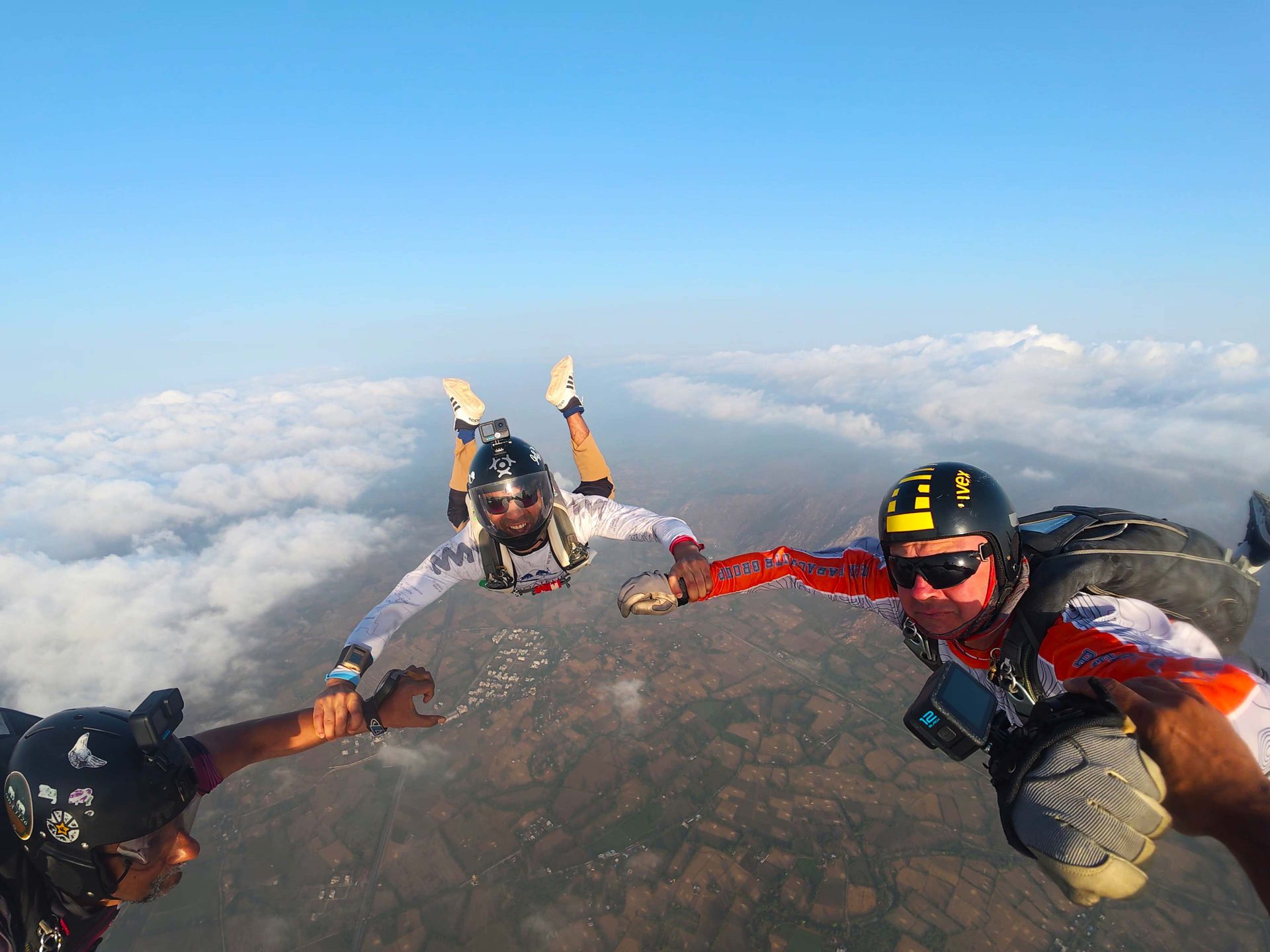
As your skills develop, freefall is progressively introduced, typically from around the sixth jump, subject to instructor assessment and the applicable training progression.
Parachute Deployment
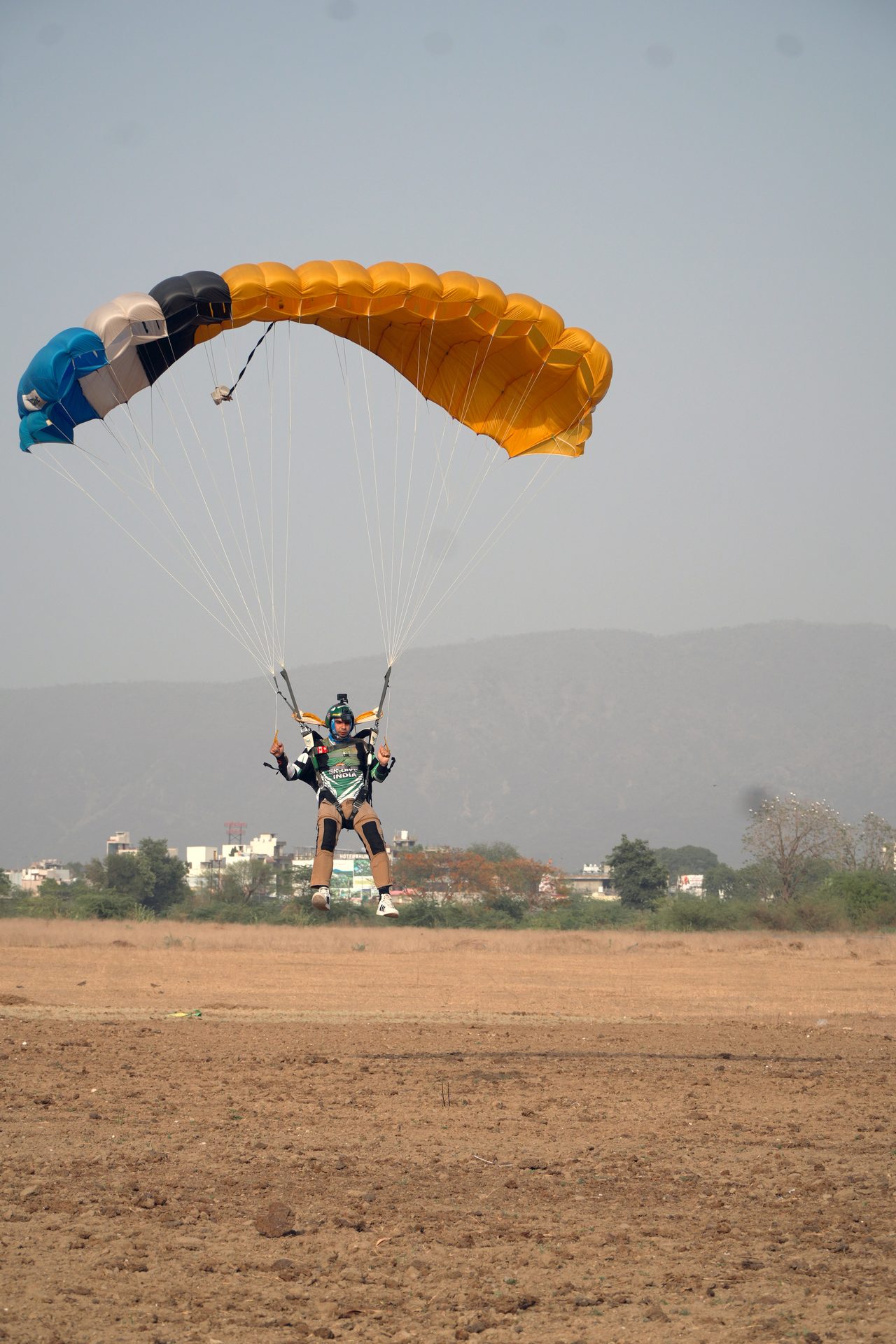
On your first jumps you exit the aircraft on your own and the static line opens your parachute. Once under canopy, you are responsible for controlling and navigating your parachute toward the designated landing area.
Ground school
Static Line Ground School: 4 to 5 Hours
Before your first jump you learn everything on the ground with your instructors, at the drop zone.
How the Static Line Works
How the line opens your parachute, how we check its route, and how to climb out of the aircraft safely.
Your Exit
A clean, strong exit into the wind in a good arch, without an instructor holding you.
The First 5 Seconds
Counting out loud and checking your canopy straight after you leave the plane.
Steering Your Canopy
Using the toggles on your own, finding your way under canopy, and landing in an alternate area if you need to.
Emergency Procedures
What to do with line twists or a container hang-up, and how to cut away.
Jump by Jump
Your Static Line Jump Plan
This route trades early freefall for more time under canopy.
Freefall is added in steps: short delays first, then full altitude jumps from 10,000 ft from jump 10.
Jump1-2
Static Line Exits
Phase 1
3,500 ft
The static line opens your parachute. A clean arch in the door, and a count to 5.
Jump3-5
Practice Pulls
Phase 1
4,000 ft
The line still opens your parachute. Three stable practice pulls in a row.
Jump6-7
Your First Pull
Phase 2
4,500 ft
No static line. You throw your own pilot chute within 5 seconds of exit.
Jump8-9
Short Freefalls
Phase 2
5,500 ft
10 to 15 seconds of freefall, your first taste of full speed.
Jump10-12
Full Altitude
Phase 3
10,000 ft
Full altitude freefall. Hold your heading and make basic turns.
Jump13-15
Flips and Loops
Phase 3
10,000 ft
Front flips, back loops and quick recovery to stable.
Jump16-17
Low Hop and Pop
Phase 4
3,500 ft
Exit and open straight away from a low height.
Jump18-20
Coach Jumps
Phase 4
10,000 ft
Group safety, how to approach other jumpers, and how to separate.
Jump21-25
License Practice
Phase 4
10,000 ft
You pack your own main parachute and log the wind and your landing pattern.
Jump26
A-License Check Dive
10,000 ft
The full test, to USPA guidelines.
After Static Line
What's Next?
When you finish your Static Line training, you can keep going.
Next step
Move On to AFF
Continue your freefall training on the AFF course with our instructors.