If you ask ten people which sounds scarier, skydiving or bungee jumping, the answers will probably split immediately.
Some people will say skydiving without thinking twice.
“Ten thousand feet? No chance.”
Others will look at a bungee platform and say they would rather jump from an aircraft than stand at an edge and look straight down.
That sounds strange until you understand how different the two experiences actually are.
They both involve height.
They both involve falling.
They both make excellent videos.
And they both create a moment where your brain strongly questions why you agreed to any of this.
Beyond that, they are not very similar.
Bungee jumping begins with a visible problem.
There is an edge in front of you.
The ground is somewhere below.
You can see the distance.
You understand exactly what will happen when you move forward.
That visual connection makes bungee jumping psychologically intense.
You are standing somewhere solid and then you have to leave it.
There is very little mystery.
Your brain can see the risk before anything happens.
Then comes the countdown.
Three.
Two.
One.
Go.
That few seconds can feel much longer than expected.
For some people, this is the hardest part of the entire activity.
Skydiving creates fear differently.
You do not normally begin at an edge.
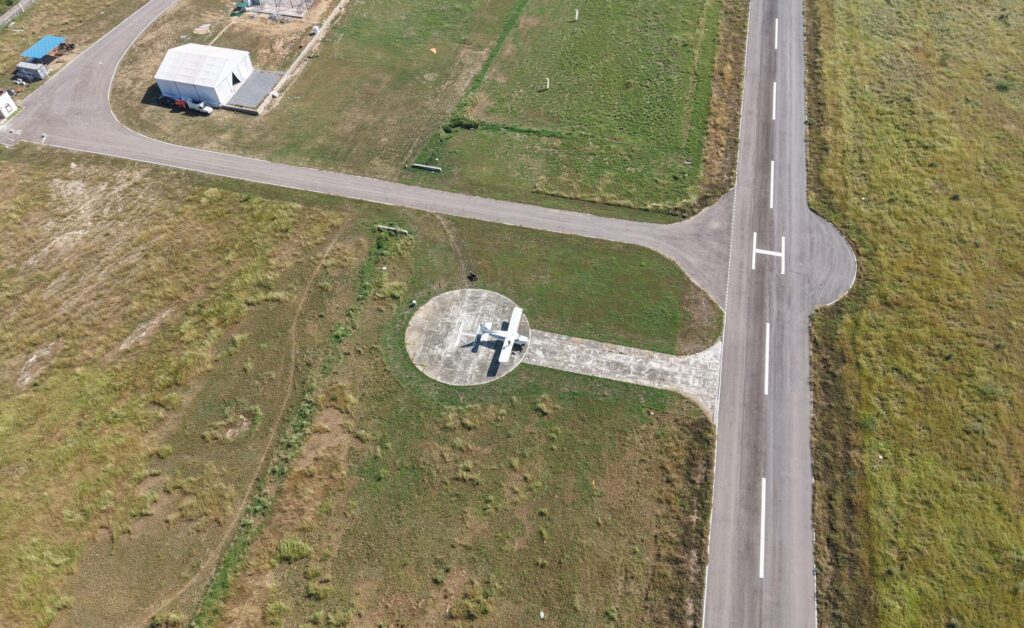
You begin at an airstrip.
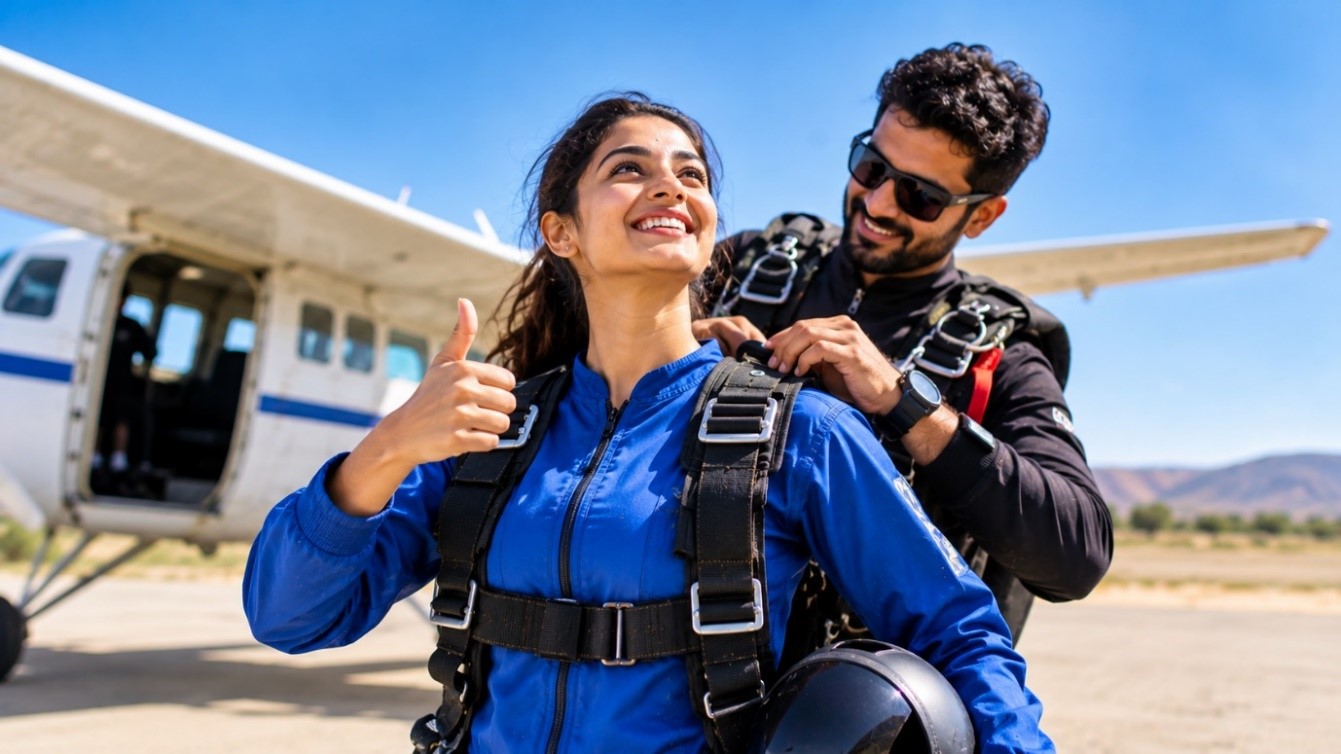
At Skydive India near Abu Road, the process starts with check-in, briefing and preparation. You put on a harness. You meet the instructor. Then you walk towards the aircraft.
Nothing has happened yet.
And that is exactly why the mind becomes so active.
You board.
The aircraft takes off.
The ground slowly moves away.
There is no sudden countdown at the beginning.
Instead, there is a climb.
You watch the altitude increase.
You know the purpose of the flight.
You know that at some point the door will open.
The fear has time to grow with the aircraft.
That is one of the biggest psychological differences between skydiving and bungee jumping.
One confronts you with an edge.
The other makes you travel towards the moment.
People often assume skydiving must feel like a much bigger bungee jump.
That comparison sounds logical, but it is not accurate.
A bungee jumper usually leaves a stationary platform.
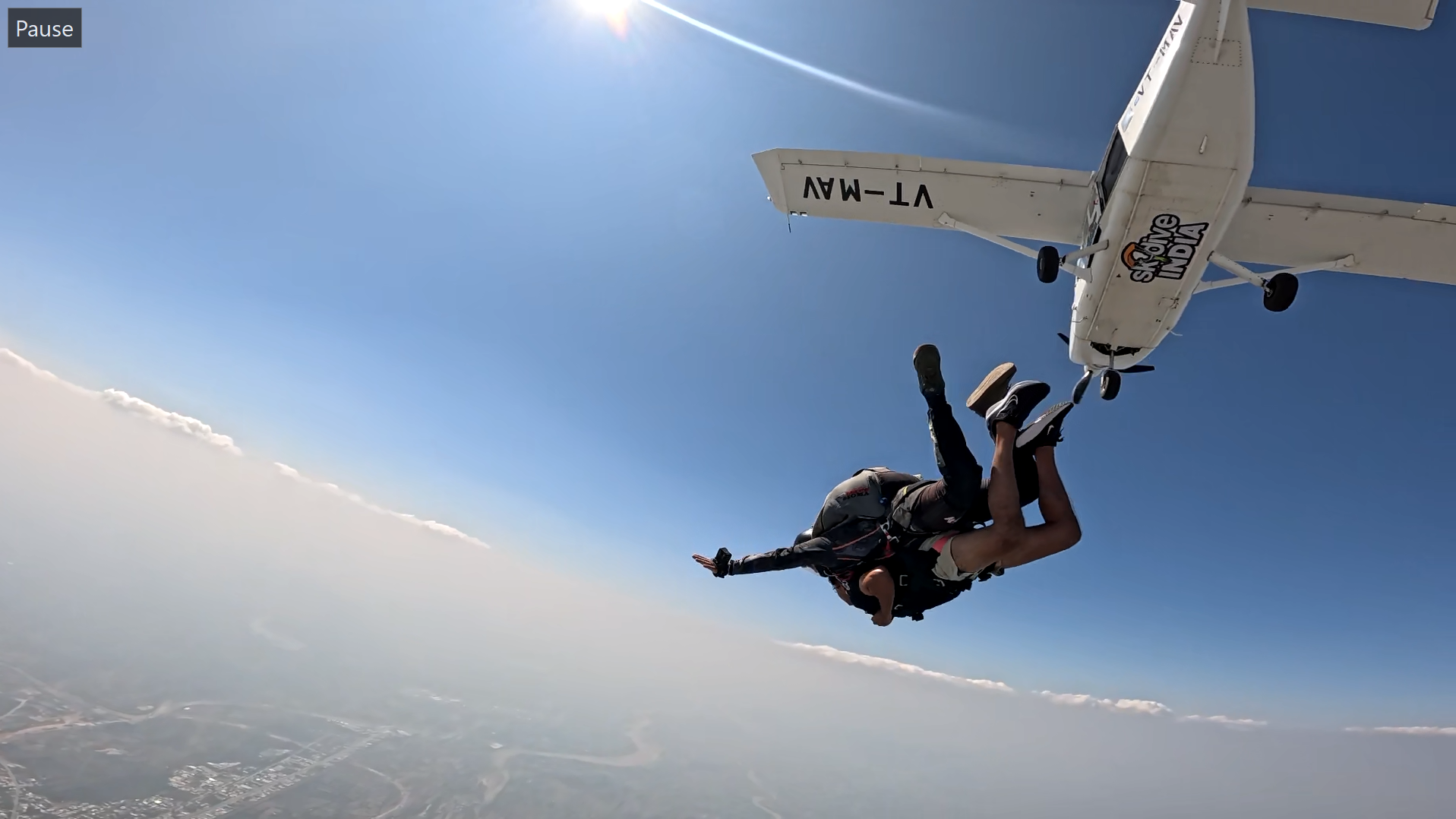
A skydiver exits an aircraft already moving through the air.
The first sensations are different.
The visual references are different.
The equipment is different.
The duration is different.
The way your body moves through the experience is different.
Even the fear is different.
During a bungee jump, the drop is the central event.
Everything is concentrated around it.
During a tandem skydive, the freefall is only one chapter.
The story starts before you get into the aircraft.
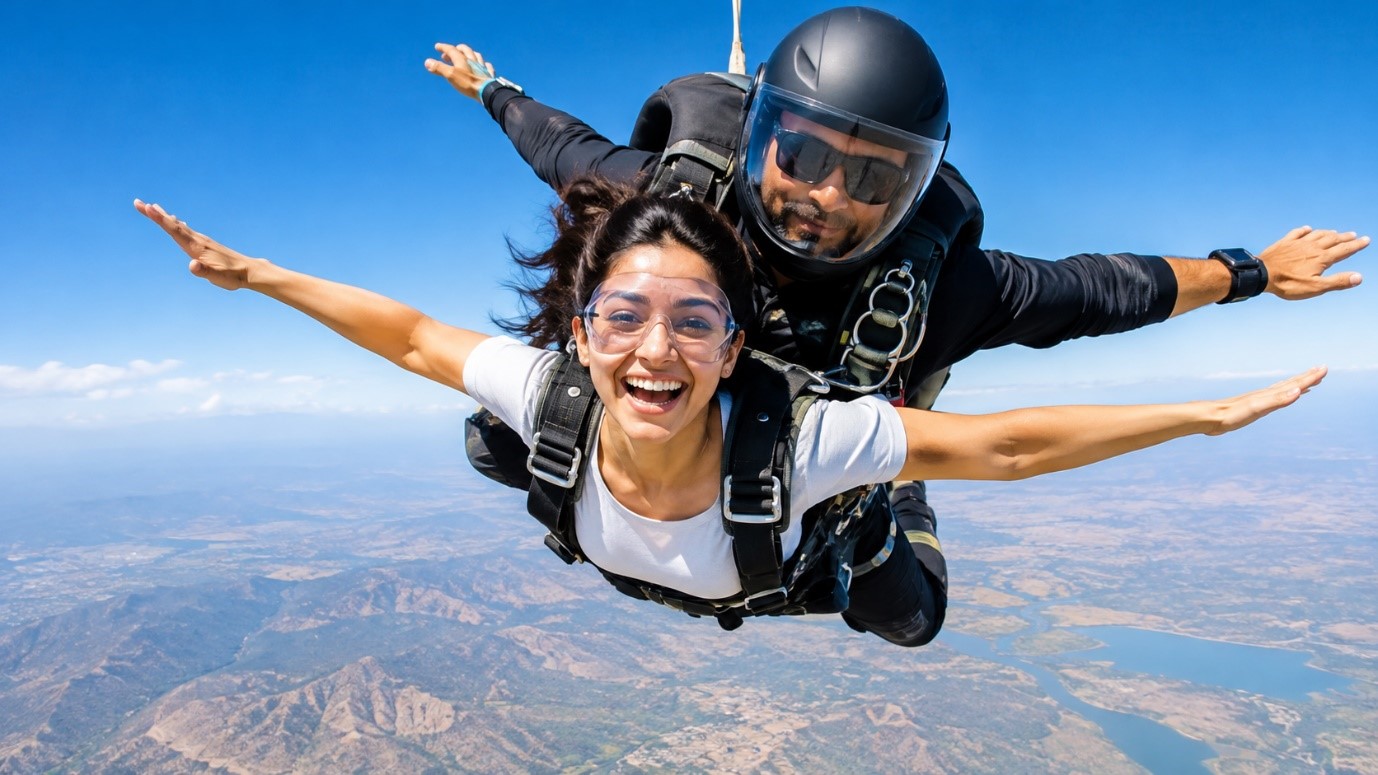
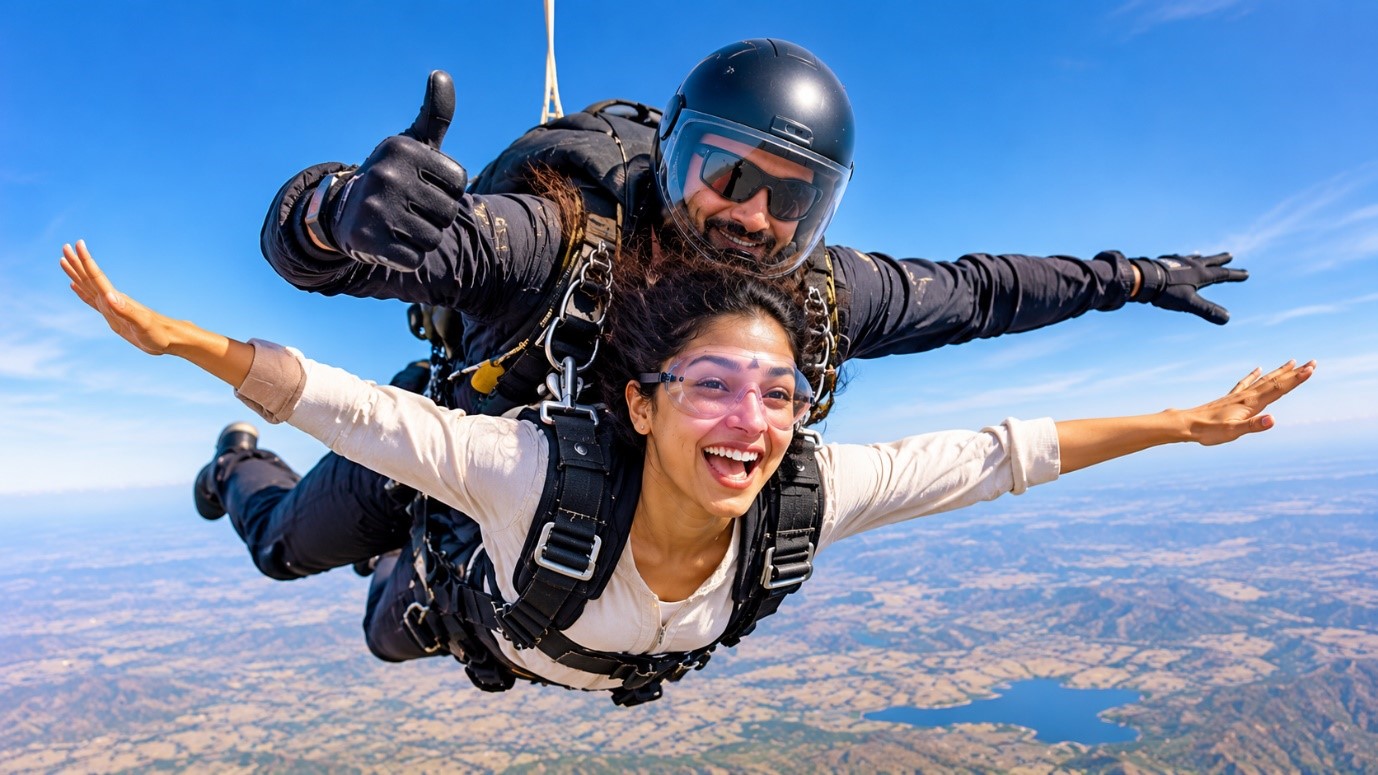
At Skydive India, the aircraft climbs towards approximately 10,000 feet. When the tandem pair exits, there is around 30 seconds of freefall before the parachute phase begins.
That freefall is the moment most people imagine.
But after the parachute opens, something unexpected happens.
The experience becomes quiet.
The speed feels dramatically lower.
You can look around.
The landscape that seemed impossibly far away during freefall becomes something you can actually observe.
This second part is one reason skydiving often feels much bigger than simply “jumping from somewhere.”
There is a journey inside the jump.
Bungee jumping is different because the intensity is more compressed.
You step off.
You accelerate.
The cord stretches.
Your movement changes.
Then you rebound.
It is powerful, fast and concentrated.
For people who want a short and direct confrontation with fear, bungee jumping has a unique appeal.
Skydiving asks for more patience.
There is more build-up.
There is more waiting.
There is the aircraft.
There is altitude.
There is a longer sequence of changing sensations.
The question of which one is scarier becomes almost impossible to answer because people fear different things.
Someone uncomfortable with edges may find bungee jumping much harder.
Someone nervous around aircraft may find skydiving more difficult.
Someone may be completely calm during the flight and become terrified when the door opens.
Another person may be frightened all the way up and become strangely relaxed the moment they leave the aircraft.
There is no standard reaction.
That is why watching videos cannot fully prepare you.
The body reacts differently when the experience becomes real.
There is also another major difference.
During a tandem skydive, a first-time participant is connected to an instructor.
You are not expected to independently manage the parachute or perform the technical work of an experienced skydiver.
The instructor manages the jump while you follow the briefing and body-position instructions.
That changes the psychology.
You are not standing alone at the edge making every decision by yourself.
For some people, that makes skydiving feel more approachable than they expected.
For others, the height still wins the argument.
The view is another major difference.
A bungee site can be extremely beautiful. Some of the world’s most famous jumps happen over rivers, valleys and dramatic landscapes.
But the perspective remains connected to one location.
Skydiving changes perspective continuously.
First you see the landscape from the aircraft.
Then you see it during freefall.
Then again during the parachute descent.
At Skydive India’s Abu Road location, the Aravalli landscape becomes part of the experience. You can see actual jump imagery through the Skydive India Gallery.
Cost also affects the choice.
Skydiving generally costs more because it requires an aircraft, fuel, aviation operations, pilots, instructors, specialised parachute systems, an airstrip and a larger operational setup.
Bungee jumping usually has a lower entry cost because the infrastructure and operating format are different.
That does not automatically make one better value than the other.
Value depends on what you want.
If you want one intense moment and a direct challenge with height, bungee jumping may give you exactly what you need.
If you want a full aerial experience built around an aircraft climb, freefall and parachute flight, skydiving gives you something much broader.
This is where many people make the wrong comparison.
They compare prices but not experiences.
A cheaper activity is not automatically better value.
A more expensive activity is not automatically more exciting.
You need to ask what you actually want to feel and remember.
There is also no rule saying you should complete bungee jumping before skydiving.
Adventure activities are not school levels.
You do not need to finish one before you unlock another.
A tandem skydive is designed for first-time participants.
If skydiving is the thing you actually want to do, there is no requirement to prove yourself somewhere else first.
The same applies in reverse.
Doing a skydive does not make a future bungee jump pointless.
The sensations are different enough that both can belong on the same bucket list.
The better question may be which one you want first.
If your imagination keeps returning to the aircraft door, do the skydive.
If the idea of standing on a platform and forcing yourself to step off is the challenge you want, do the bungee jump.
If you want the shortest version of the answer, here it is.
Bungee jumping is about the edge.
Skydiving is about the sky.
One compresses fear into a moment.
The other stretches anticipation across an entire climb.
One gives you a powerful drop.
The other gives you an aircraft ride, freefall and a parachute descent in one experience.
Both can be unforgettable.
They simply become unforgettable for different reasons.
And if skydiving is the one you keep searching for after reading comparisons like this, that probably tells you something.
You can explore the current Tandem Skydiving experience, read the first-jump FAQ and understand the location through the Skydive India Drop Zone page.
At some point, the comparison ends.
You choose one.
And then you find out what it actually feels like.