If you’re reading this, there’s a good chance you’ve already watched someone jump out of an aeroplane on your phone.
You saw the open sky, the wind, the excitement and perhaps that enormous smile after landing.
But somewhere between watching that video and imagining yourself doing the same thing, a question probably crossed your mind:
“Is skydiving actually safe?”
It’s a sensible question. You’re considering an adventure that involves leaving an aircraft thousands of feet above the ground. Of course you want to know how it works, who will be responsible for you and what happens if something doesn’t go as planned.
The exciting part of skydiving gets most of the attention. The preparation behind it deserves just as much.
At Skydive India, operated by Macsen Aviation Pvt. Ltd., safety involves much more than the few seconds you see in a skydiving video.
Let’s look at what happens behind the scenes, what safety equipment is designed to do, and what you should know before deciding to make your first jump.
Is Skydiving Safe for First Time Jumpers?
The short answer: Skydiving is an adventure sport with real risks, and no skydive can be guaranteed to be completely safe. Tandem skydiving gives first time participants a supervised introduction to the sport. A trained instructor, equipment checks, backup parachute systems, weather assessments and operational procedures all play a role in managing those risks.
What matters is not simply having safety equipment. It is how the entire jump is prepared, conducted and supervised.
That’s why understanding the process is more useful than hearing someone say, “Don’t worry, it’s perfectly safe.”
What Is Tandem Skydiving, and Why Do Beginners Choose It?
Imagine trying to drive a racing car without ever having driven before. You probably wouldn’t want your first experience to involve figuring everything out on your own.
Skydiving has its own version of that distinction.
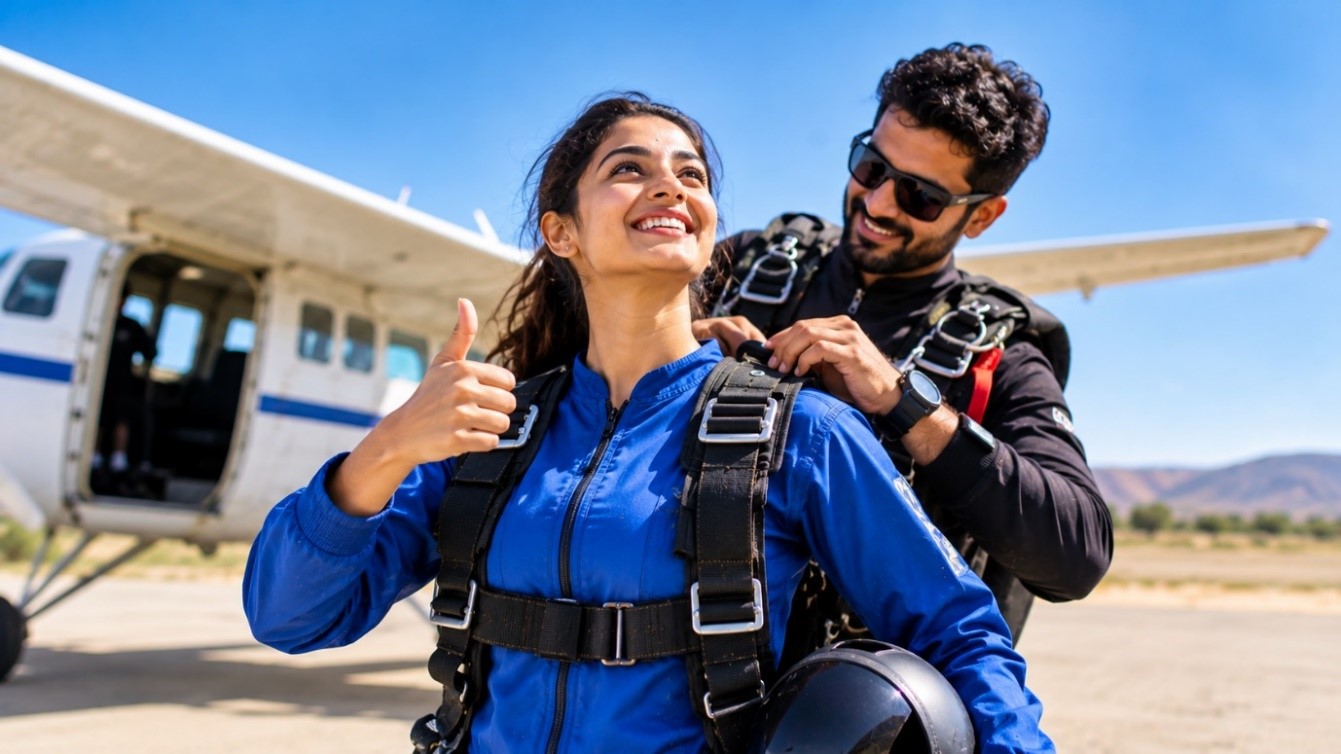
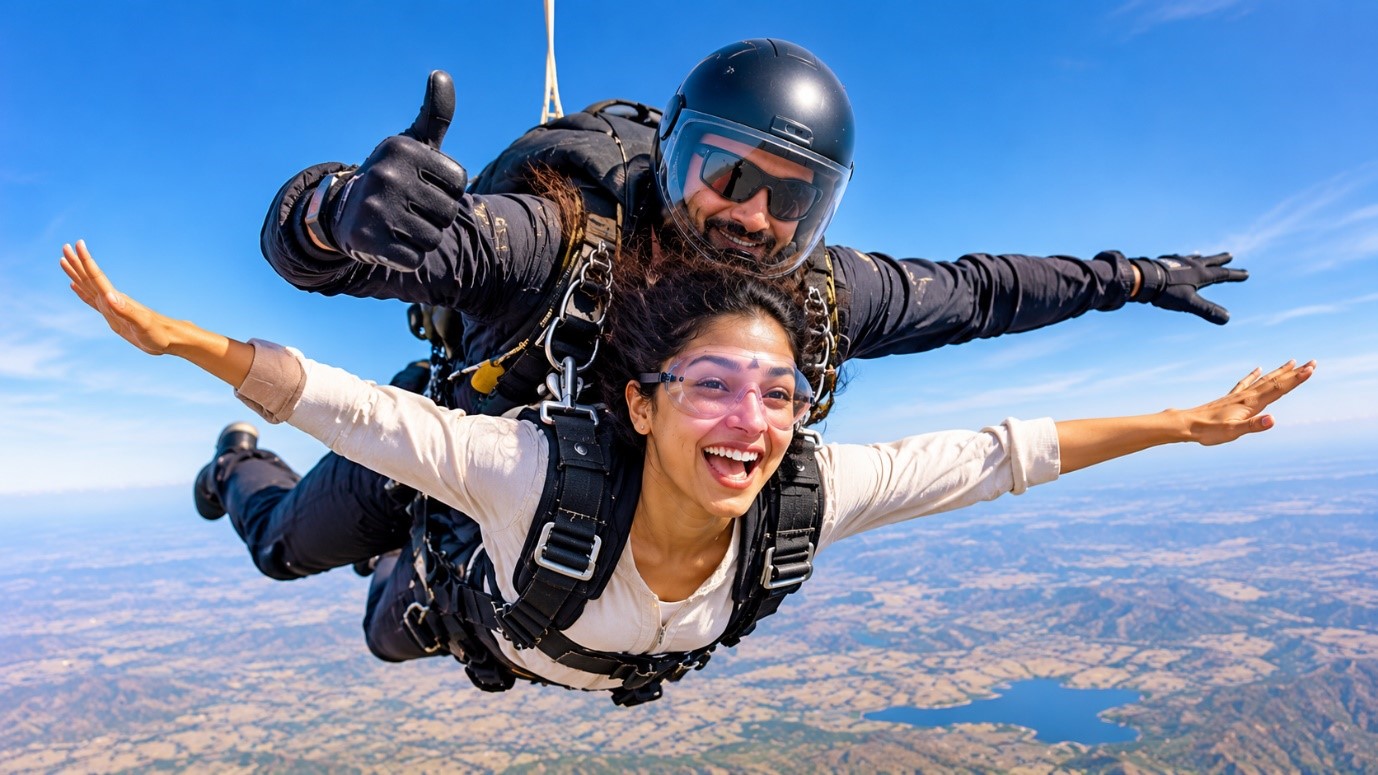
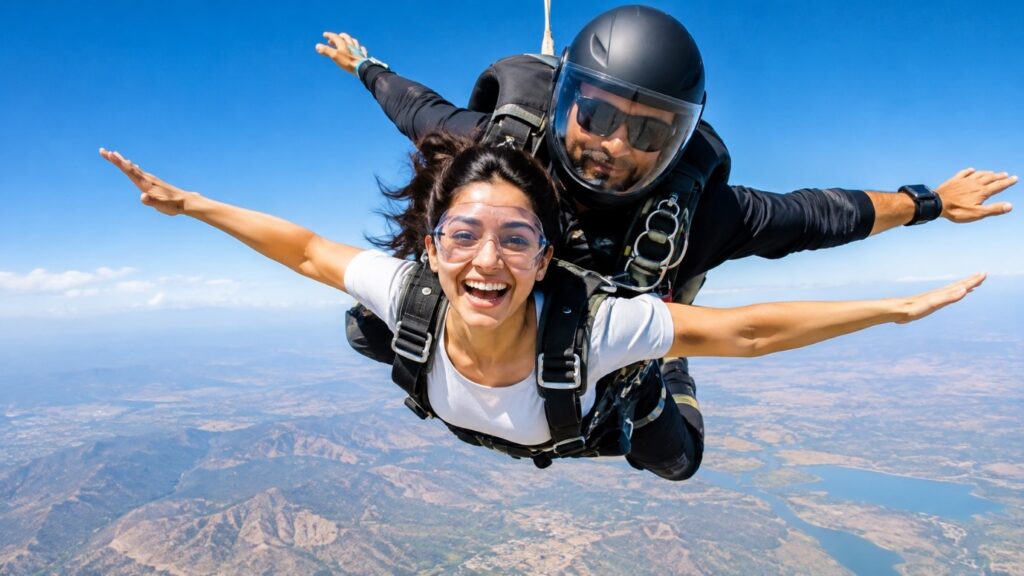
In a tandem skydive, you are connected to a trained tandem instructor using a purpose designed harness system. You jump together and share the parachute system.
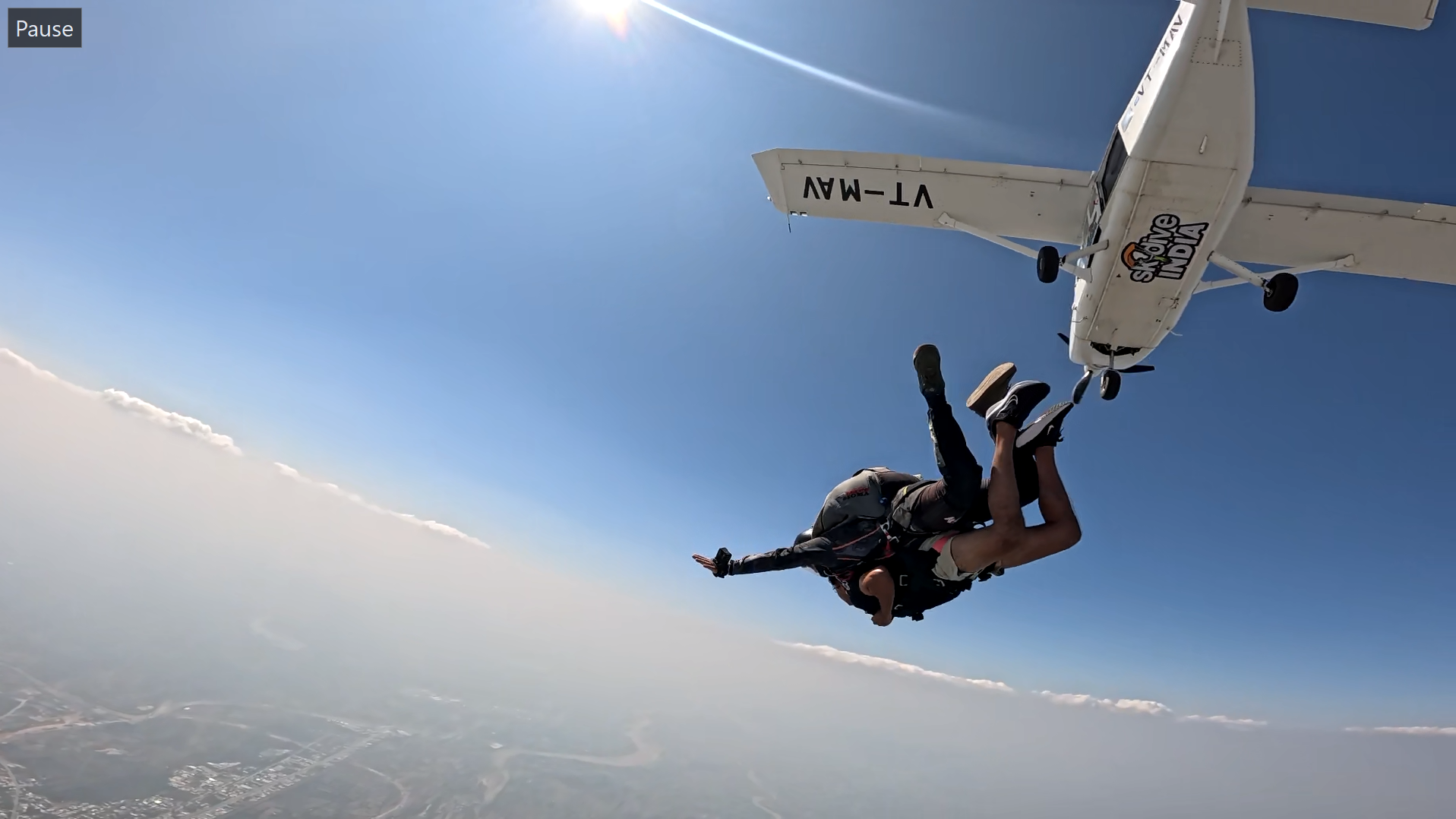
The instructor manages the technical parts of the jump, including aircraft exit, freefall, parachute deployment and the flight under the parachute.
Your responsibility is different. You need to pay attention during the briefing, practise the required body positions and follow your instructor’s directions.
You don’t need previous skydiving experience to take part in a tandem jump.
At Skydive India, tandem jumps are advertised from approximately 10,000 feet, with around 30 seconds of freefall, followed by a descent under the parachute. Actual conditions and timings can vary.
For someone who has always wanted to experience freefall but does not intend to train as an independent skydiver, tandem skydiving is a practical starting point.
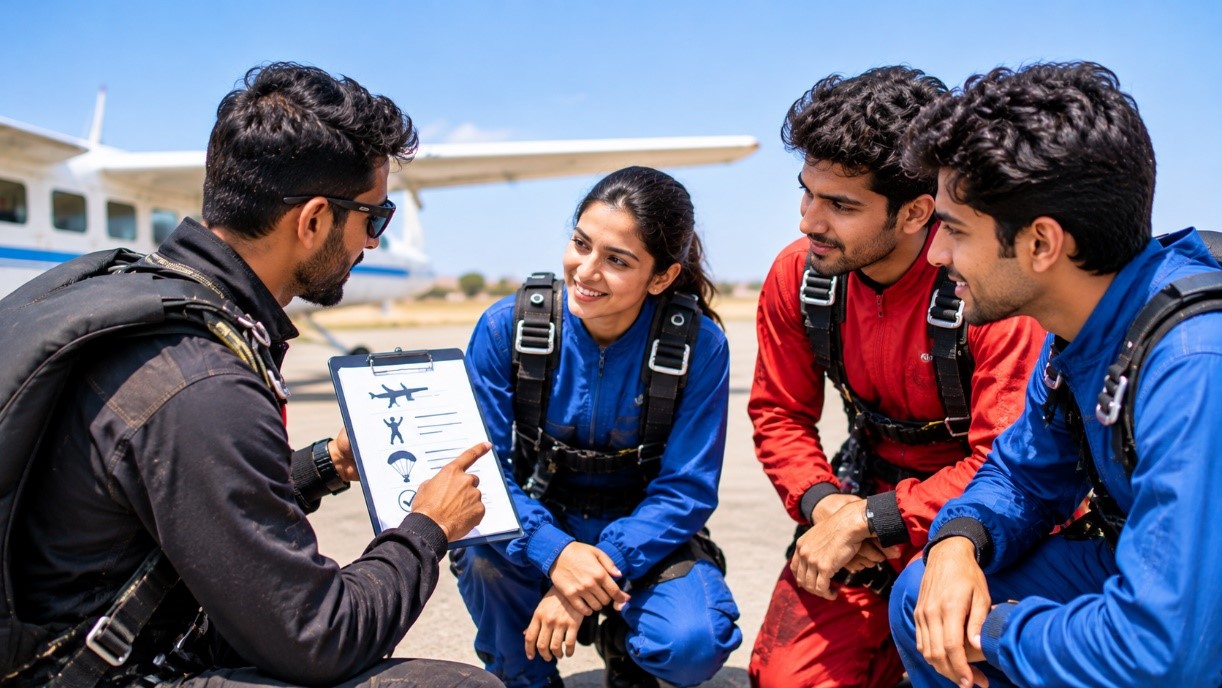
The Safety Process Begins Before You Board the Aircraft
When people think about skydiving safety, they often imagine somebody checking a parachute just before the jump.
That’s important, but it is only one part of the process.
A skydive involves multiple decisions, and some of the most important ones happen while you’re still on the ground.
1. Checking Whether You Are Eligible to Jump
Before participating, the team needs accurate information about you.
Your age, weight, medical history, ability to fit safely into the equipment and capacity to follow instructions are all relevant.
This isn’t merely paperwork.
The aircraft, instructor and parachute equipment must operate within their applicable limits. A participant must also be able to carry out the instructions involved in exiting the aircraft and landing.
It is important to disclose medical conditions, recent injuries or other concerns honestly.
A fitness certificate, when required, does not automatically guarantee that a person will be approved to jump. Final suitability is assessed by the responsible team.
2. Understanding the Safety Briefing
You might be surprised by how much of a beginner’s briefing focuses on a few simple movements.
Your instructor explains what to expect during the flight, how to position your body at the aircraft exit, what to do during freefall and how to prepare for landing.
You may practise these positions before putting them into action.
There is a reason for this.
When you’re excited or nervous, remembering a simple movement you’ve already practised can be easier than trying to understand a new instruction for the first time.
Don’t be afraid to ask a question twice.
If anything is unclear, the best time to discuss it is before boarding.
3. Checking the Harness and Parachute Equipment
A tandem jump uses specialist equipment designed for two people jumping together.
This includes a harness and container system, a main parachute, a reserve parachute and other components appropriate to the system being used.
The equipment needs to be suitable for the instructor and participant, correctly fitted, inspected and prepared for use.
At Skydive India, the published safety policy describes equipment checks, harness fitting and maintenance in accordance with applicable requirements.
The company also provides information about its parachute rigging services, including equipment preparation, packing and inspection.
The equipment is important. So are the people responsible for maintaining and checking it.
4. Confirming Aircraft and Instructor Readiness
A skydiving aircraft is part of the operation, not simply transport to the jump altitude.
Before a jump can proceed, the operational team considers aircraft readiness, pilot and instructor readiness, loading arrangements, equipment status and relevant airfield conditions.
The instructor also needs to be satisfied that the participant is prepared.
If an essential requirement is not met, the responsible personnel may delay or decline the jump.
5. Assessing the Weather
A sunny morning doesn’t automatically mean ideal skydiving conditions.
Wind speed, wind direction, gusts, turbulence, visibility, cloud conditions and the suitability of the landing area all matter.
Weather can change after the first assessment, which is why conditions must continue to be evaluated.
Sometimes the appropriate decision is to wait.
Sometimes it is to change the jumping schedule.
And sometimes it is to postpone the activity altogether.
For a customer who has travelled to make a jump, that can be disappointing. But weather decisions need to be based on operating conditions, not on how far someone has travelled or how much they were looking forward to the experience.
6. Following Instructions Throughout the Jump
The safety briefing isn’t something you finish and forget.
Your instructor may give directions during boarding, the aircraft climb, the exit, freefall, parachute flight and landing.
Your job is to listen, cooperate and avoid interfering with the equipment.
You are part of the process, even though you’re not responsible for operating the parachute yourself.
What Happens If a Parachute Doesn’t Open?
This is probably one of the first things that comes to mind when somebody considers skydiving.
It’s also a question that deserves a proper explanation.
Modern tandem parachute systems generally have two parachutes: a main parachute and a reserve parachute.
The main parachute is intended for normal use. The reserve is a separate backup system intended for use when the main parachute cannot be used safely.
A trained instructor follows the applicable emergency procedures when dealing with parachute problems.
Some important skydiving equipment also incorporates an Automatic Activation Device (AAD).
An AAD is designed to initiate reserve parachute deployment when specific altitude and descent rate conditions are met. It provides an additional backup function where fitted, but it does not replace correct procedures or make an emergency outcome certain.
The exact equipment configuration should always be confirmed with the skydiving operator.
It is important to understand one thing: having backup equipment reduces reliance on a single system, but it does not remove every possible risk.
If you’re curious about how the equipment works, ask the team to explain it before your jump. It’s a reasonable question.
Who Is Responsible for Your Safety During a Tandem Jump?
The tandem instructor is the person you interact with most closely, but a skydive involves several professional responsibilities.
The pilot is responsible for the safe operation of the aircraft. Qualified personnel prepare, inspect and maintain the parachute equipment within their respective responsibilities. Ground personnel help coordinate participants, aircraft movements, landing areas and operational communication.
Your tandem instructor manages the jumping sequence and gives you the instructions needed for the activity.
That is why choosing an operator deserves a little more research than comparing photographs and package prices.
When considering a skydiving centre, you should be able to ask about the instructor’s relevant qualifications, the parachute system, the briefing process and the operator’s approach to weather related decisions.
The answers should be specific, understandable and consistent with the operator’s published information.
Why Weather Delays Can Be a Good Sign
Picture this.
You’ve planned your trip. You’ve arrived at the airstrip. You’ve told your friends you’re finally going skydiving.
Then the team announces a delay because the wind conditions are unsuitable.
It would be natural to feel disappointed.
But skydiving is not an activity where every scheduled jump must happen regardless of conditions.
The wind you feel while standing on the ground does not necessarily tell the complete story about conditions during aircraft exit, parachute descent or landing.
At Skydive India, the safety policy provides for holding, changing the sequence, rescheduling or cancelling jumps when conditions are unsuitable.
When planning your trip, allow flexibility rather than making tight onward travel commitments.
Before making a payment, also read the applicable booking terms and refund policy, and confirm any rescheduling questions directly with the team.
Can Everyone Go Skydiving?
Not necessarily.
Tandem skydiving is designed to be accessible to people without previous jumping experience, but that doesn’t mean every person will be eligible.
Age, weight, fitness, medical circumstances and equipment suitability can affect participation.
Skydive India’s published terms currently state a minimum participation age of 12 years, with parental or guardian consent required for participants younger than 18. Its FAQ lists a maximum participant weight of 113 kg.
These are published operator requirements, not a promise of individual eligibility. The operations team must confirm suitability, and the applicable requirements should be reconfirmed before booking.
Medical matters deserve particular attention.
If you have a heart condition, a history of seizures or fainting, a significant back or neck problem, a recent operation, pregnancy, or another condition that may affect your participation, disclose it before booking and seek appropriate medical advice.
Do not assume that feeling healthy is the same as being medically cleared.
You can review the current requirements in the booking terms and skydiving FAQs.
What About Emergency Procedures?
People usually hope they will never need to think about emergency procedures.
Professional skydiving operations, however, need to consider them before they are needed.
Different situations may require different responses: an aircraft problem, a parachute malfunction, an unexpected landing location, an injury or a sudden change in weather.
Skydive India’s published safety policy describes emergency planning, ground team communication, landing area control, first response and escalation to local emergency services when required.
These arrangements are intended to support an organised response. They cannot guarantee that an emergency will never occur or that every outcome can be controlled.
You should also understand the insurance position before participating.
Skydive India’s published booking information says personal insurance coverage is not automatically provided. Check whether any personal accident or travel insurance you hold explicitly covers tandem skydiving, and ask the insurer about exclusions.
Can Skydiving Safety Statistics Tell You How Safe Your Jump Will Be?
Safety statistics can help people understand risk, but they need context.
For example, the United States Parachute Association reported an estimated 3.47 million skydives and 16 civilian skydiving fatalities in the United States in 2025.
These figures cover skydiving activities in that country. They should not be treated as the risk rate for a first time tandem jump in India or as a safety record for any individual operator.
An overall statistic cannot tell you who your instructor will be, what equipment will be used, what the weather will be like or whether you personally meet participation requirements.
Those questions need their own answers.
For independent background information, you can read the USPA’s explanation of skydiving safety.
What Should You Check Before Booking Your First Skydive?
You don’t need to become an expert in parachute systems before booking a tandem jump.
But you should feel comfortable asking a few straightforward questions.
Who will be responsible for my jump, and what qualifications do they hold? What equipment checks are performed? Am I eligible based on my age, weight and medical circumstances? What happens if weather prevents the jump? Are the booking terms and insurance arrangements clear?
Pay attention to how those questions are answered.
A trustworthy explanation should help you understand what will happen. It shouldn’t require you to accept vague promises.
Skydiving With Skydive India in Rajasthan
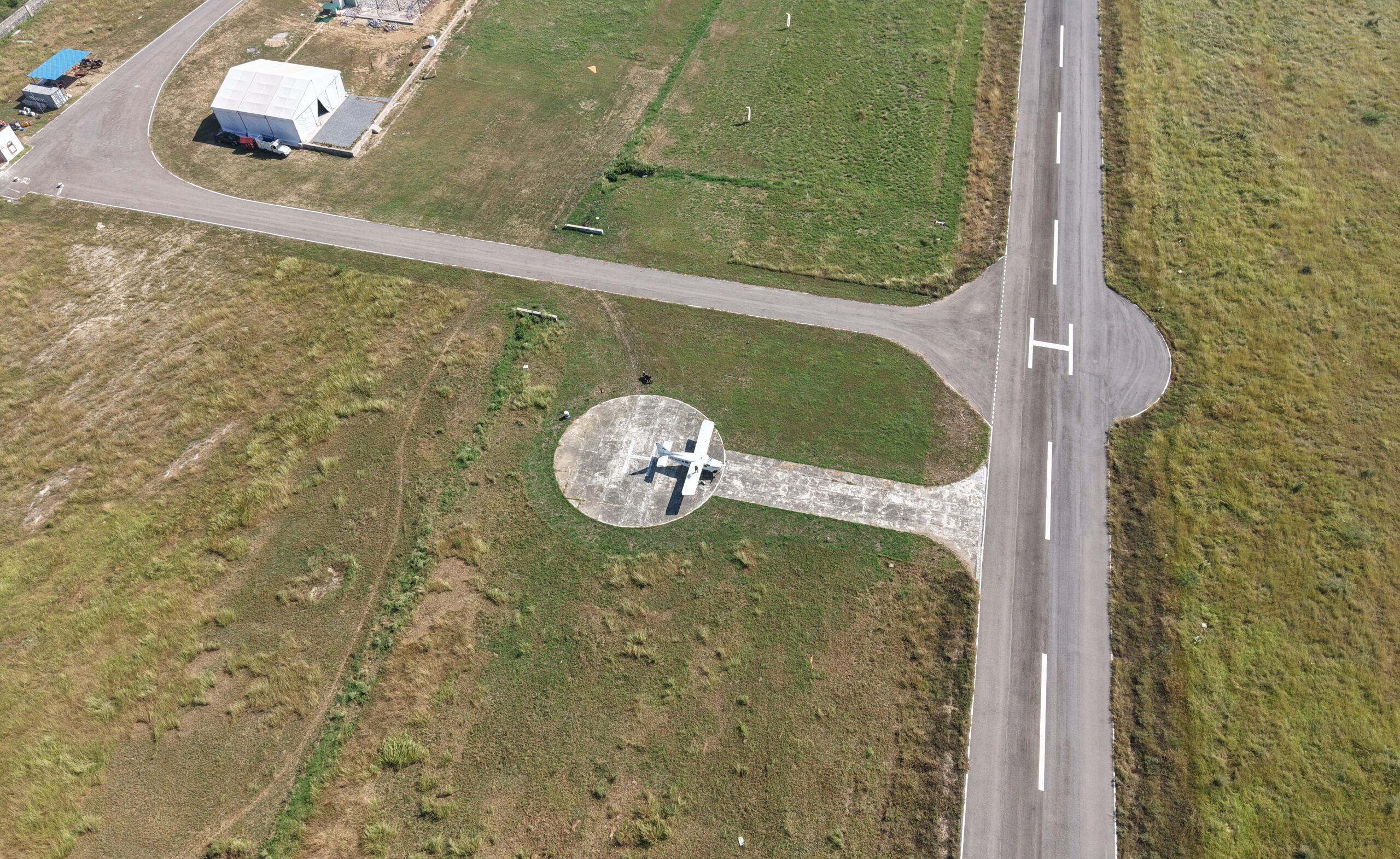
If you’re planning your first skydive in Rajasthan, Skydive India operates from Manpur Airstrip near Abu Road, in the Mount Abu region.
The location is surrounded by the landscape of the Aravalli hills and can be reached by travellers coming from cities including Udaipur and Ahmedabad.
Skydive India, operated by Macsen Aviation Pvt. Ltd., offers tandem skydiving for first time participants, along with other skydiving programmes.
Before travelling, you can review the tandem skydiving packages, location and directions and safety policy.
Contact the team ahead of your visit if you need clarification about eligibility, equipment, scheduling or any other aspect of the experience.
Frequently Asked Questions About Skydiving Safety in India
1. Is skydiving safe for beginners in India?
Skydiving involves inherent risk, even when it is professionally supervised. Tandem skydiving allows beginners to participate with a trained instructor who manages the technical aspects of the jump. Equipment checks, briefings, weather assessment and operational procedures all help manage risk, but no skydive is completely risk free.
2. Do I need training before tandem skydiving?
You do not need previous skydiving experience. However, you must complete the required safety briefing and understand the instructions given by your instructor. This usually includes body positioning, aircraft behaviour and landing preparation.
3. What happens if the main parachute fails?
Tandem parachute systems include a separate reserve parachute intended for emergency use. The instructor follows the appropriate emergency procedures for the situation. A reserve is an important backup, but it cannot guarantee an injury free outcome.
4. Do parachutes open automatically?
The main parachute is normally deployed through the tandem instructor’s actions using the equipment’s intended system. Some parachute systems also use an Automatic Activation Device, which can initiate reserve deployment under specified conditions. It is a backup device, not a guarantee of automatic rescue in every situation. Confirm the features of the specific equipment with your operator.
5. Can you breathe during skydiving?
Yes. People can breathe during freefall, although the fast moving air and unfamiliar sensation can feel unusual. Your instructor explains the recommended position and what to expect. Anyone with a relevant respiratory or medical concern should disclose it before participating.
6. What if I get scared before jumping?
Feeling nervous is understandable. Tell your instructor what concerns you, and ask for an explanation before boarding. If you are uncomfortable or cannot follow the necessary instructions, discuss that with the team rather than forcing yourself to continue. Any cancellation or refund consequences depend on the applicable booking terms.
7. Will skydiving happen if the weather is bad?
No jump should proceed when the responsible operational team determines that conditions are unsuitable. Wind, turbulence, clouds, visibility and other factors can affect whether skydiving takes place. A booking may be delayed, rescheduled or cancelled according to the circumstances and applicable terms.
8. Is there an age or weight limit for skydiving in India?
Requirements vary between operators and activities. Skydive India’s published terms currently list a minimum age of 12 years, with guardian consent required for participants under 18. Its FAQ lists a maximum weight of 113 kg. Individual approval also depends on medical suitability, equipment limits and operational assessment. Confirm the current requirements before booking.
9. Is medical fitness important for tandem skydiving?
Yes. The activity involves aircraft movement, freefall, parachute descent and landing. Relevant medical conditions, injuries, recent surgery and medications should be disclosed in advance. The team may require additional medical documentation or decline participation where necessary.
10. Does Skydive India provide insurance for skydiving?
According to its currently published booking information, Skydive India does not automatically provide personal skydiving insurance. Participants should review their existing cover or ask an insurer about appropriate protection specifically including tandem skydiving.
11. Can my family watch my tandem skydive?
Skydive India’s FAQ says accompanying guests can watch from the designated viewing area. Visitors must follow ground team instructions and remain away from restricted aircraft, equipment and landing zones.
Ready to Experience Your First Skydive?
The most memorable part of a skydive may be the moment you leave the aircraft.
But making an informed decision starts much earlier.
Understand the activity. Ask the questions that matter to you. Be honest about your health and suitability. And choose an operator whose procedures and explanations give you confidence in the decisions being made.
At Skydive India, we believe an unforgettable experience should begin with clear information.
Thinking about your first tandem skydive in Rajasthan?
Explore Tandem Skydiving Packages | Ask Our Team a Question | Read Our Safety Policy