The Part of Skydiving Most Customers Rarely Research
Ask someone what equipment is involved in skydiving and they will probably say a parachute.
Some may mention a harness.
Very few will mention the aircraft.
Yet without a suitable aircraft, there is no 10,000-foot exit, no freefall and no drop-zone operation.
The aircraft is where a skydive physically begins.
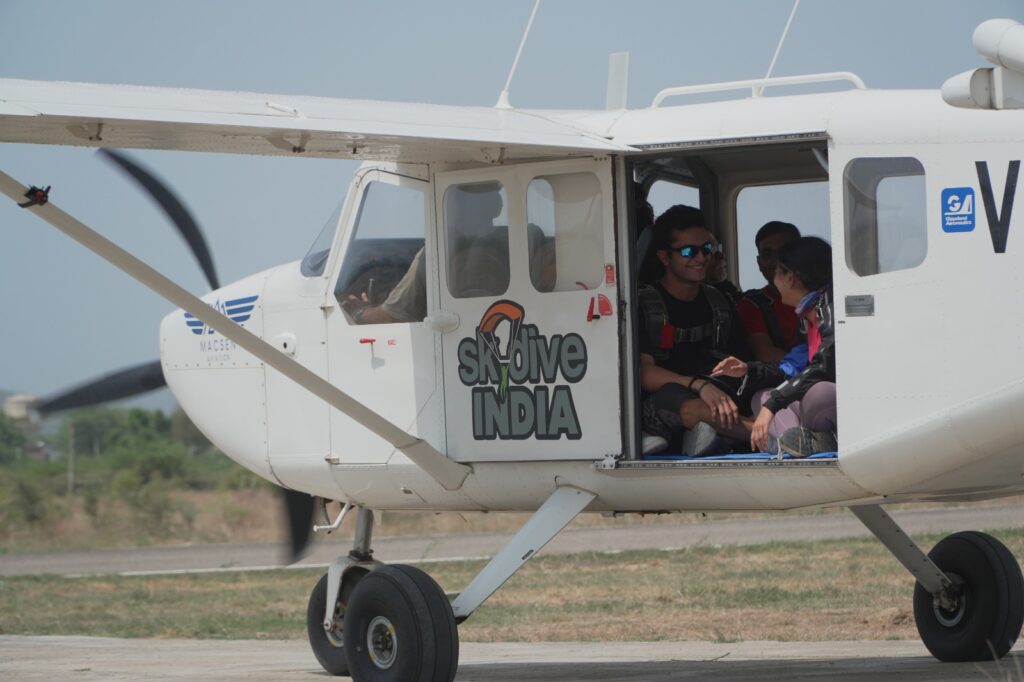
At Skydive India, jump operations use the GippsAero GA8 Airvan, an eight-seat aircraft designed for utility and aerial operations and configured for skydiving use.
For an ordinary passenger, a plane exists to transport someone between airports.
For a skydiver, the aircraft has a very different job.
It must take jumpers efficiently to altitude, operate within the requirements of the airfield and provide an appropriate platform from which trained skydivers and tandem pairs can exit.
That makes the aircraft an integral part of the entire skydiving system.
A Skydive Is an Aviation Operation Before It Is an Adventure Experience
Customers naturally think about the emotional side of skydiving.
They imagine fear at the door.
They imagine freefall.
They imagine opening the parachute and looking at the landscape.
Operational teams think about a much longer sequence.
The aircraft has to be ready. The pilot and jump team have to coordinate. Loading must be managed. Weight and balance considerations matter. Jumpers need to be seated and positioned appropriately. The climb needs to take place within the planned aviation environment. The exit has to occur at the correct point and altitude.
Only after all of that does the photograph people associate with skydiving actually happen.
This is one reason choosing a professional skydiving operation means looking at more than a dramatic social-media reel.
The infrastructure behind the jump matters.
What Is the GA8 Airvan?
The GippsAero GA8 Airvan is a single-engine utility aircraft known for a spacious cabin relative to its size and its usefulness in specialist aviation roles.
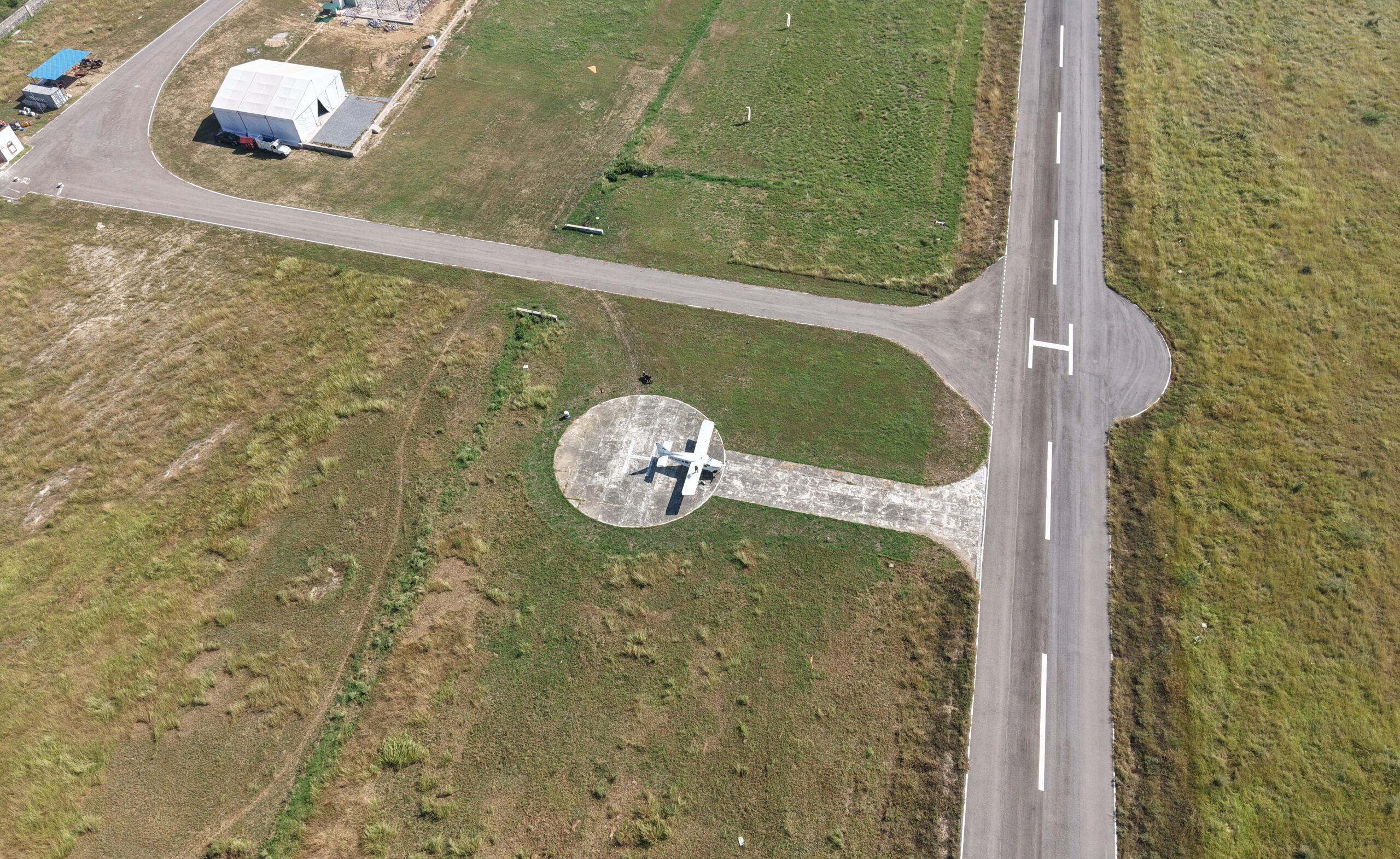
At Skydive India, the aircraft is used to carry jumpers from Manpur Airstrip near Abu Road toward an altitude of approximately 10,000 feet.
The aircraft’s configuration provides the practical characteristics needed for skydiving operations, including cabin space, loading capability and an exit arrangement suited to jumping.
You can see more information and photographs on the official Skydive India Aircraft page.
But specifications alone do not explain why the plane matters.
To understand that, follow a tandem customer from the ground.
From the Airstrip to 10,000 Feet
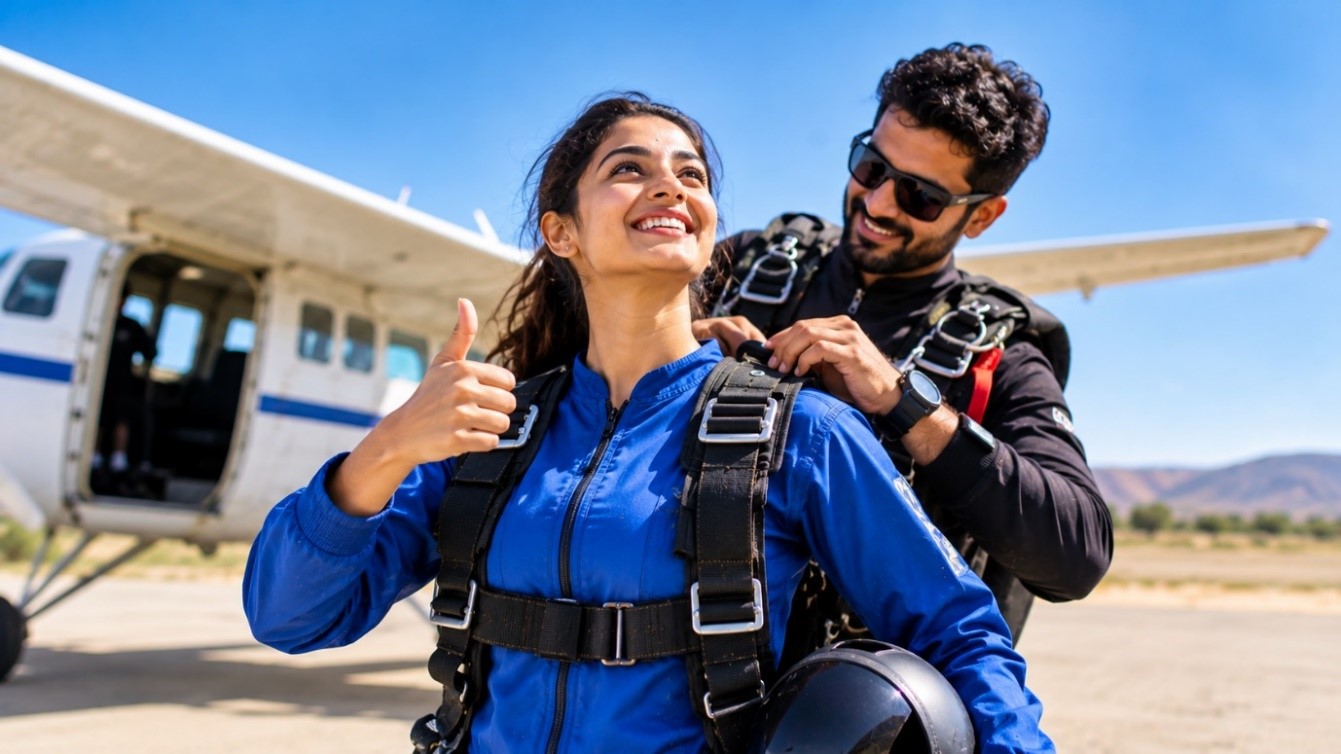
After completing check-in, briefing and equipment preparation, a tandem participant approaches the aircraft with the instructor.
Until this point, the skydive has taken place entirely on the ground.
Boarding marks the transition.
The aircraft begins its takeoff roll at the drop zone and leaves the runway.
Initially, the view outside still resembles what you saw from ground level. Buildings, roads and terrain remain easy to interpret.
Then altitude changes everything.
As the climb continues, individual objects lose importance and the entire landscape becomes the view.
For a first-time jumper, that climb is not dead time before the “real” experience.
It is one of the defining chapters of the jump.
Why Climb Performance Matters
A skydiving aircraft does not simply need to fly.
Its role includes repeatedly transporting jumpers to operational altitude during a jump day.
The relationship between aircraft capability, load, weather and operations affects how efficiently those flights can be conducted.
For the customer, the result is simple. The aircraft needs to take the tandem pair from the drop zone toward jump altitude in a professionally managed sequence.
For the operating team, the picture is much more detailed.
Pilots, instructors and ground personnel work within the aircraft’s operating limitations as well as the conditions present at the airfield.
This is why Skydive India’s Safety Policy treats aircraft coordination as one of the central parts of jump operations rather than as a separate transport function.
The Cabin Has a Different Purpose from a Passenger Aircraft
A commercial airline cabin is designed around passengers remaining inside until the aircraft lands.
A skydiving aircraft has a very different mission.
The people boarding intend to leave while the aircraft is still flying.
That changes how space is used.
Skydivers need to prepare for an orderly exit. Tandem instructors need to work with students. Experienced jumpers may need to position themselves according to exit order. Communication between the pilot and jump team is essential.
The environment is practical rather than luxurious.
Everything exists to support the operation.
For a first-time tandem jumper, this can be one of the most memorable surprises. The flight does not feel like a commercial journey. It feels directly connected to the activity you are about to perform.
Why the Door Matters
There is a moment in almost every first-skydive video when the atmosphere changes completely.
The aircraft door opens.
Before that instant, the jumper is inside an enclosed aircraft looking at the world through openings and windows.
After it, there is unobstructed sky outside.
A door suitable for jump operations allows the tandem pair or skydiver to position for exit under the instructor’s direction.
This transition seems simple in a video because it happens quickly.
From an operational perspective, exit procedures are carefully coordinated.
From the participant’s perspective, the moment is unforgettable.
The aircraft has taken you as far as it can.
The next part happens outside it.
The Pilot Is Part of the Skydiving Team
Skydiving is often visually represented by instructors, parachutes and jumpers because those are the people and equipment visible during freefall.
The jump pilot is equally important to the operation.
The pilot manages the aircraft while coordinating with the operational requirements of the jump.
That includes the climb, aircraft positioning and communication required before jumpers exit.
The pilot’s role is one of the reasons skydiving should be understood as an aviation activity as well as an adventure sport.
At the Skydive India drop zone, the aircraft, airstrip, pilot, tandem team and ground operation function as one connected system.
The participant experiences the result of that system as a single jump.
Why Weather Affects the Aircraft and the Jump
Visitors sometimes assume that a bright sky automatically means perfect skydiving weather.
Operational reality is more complicated.
Wind direction, wind strength, gusts, cloud base, visibility, turbulence, rainfall and airfield conditions can all affect different parts of the operation.
Conditions need to be suitable not only for the person under the parachute but also for aircraft operation, exit planning and landing-area management.
A weather hold can therefore happen even when someone standing outside believes the weather “looks fine.”
Professional skydiving requires decisions based on operational parameters rather than appearance alone.
The Aircraft Gives You the View Before the Adrenaline
Freefall is so intense that people sometimes overlook the scenic flight that precedes it.
At Abu Road, the aircraft climb reveals the surrounding Aravalli landscape from progressively higher perspectives.
There is no instant transition from runway to 10,000 feet.
You watch the world gradually expand below.
For someone who has never been in a small specialist aircraft before, that part of the journey may itself feel new.
Then comes the exit.
At approximately 10,000 feet, the tandem instructor takes the participant through the final preparation.
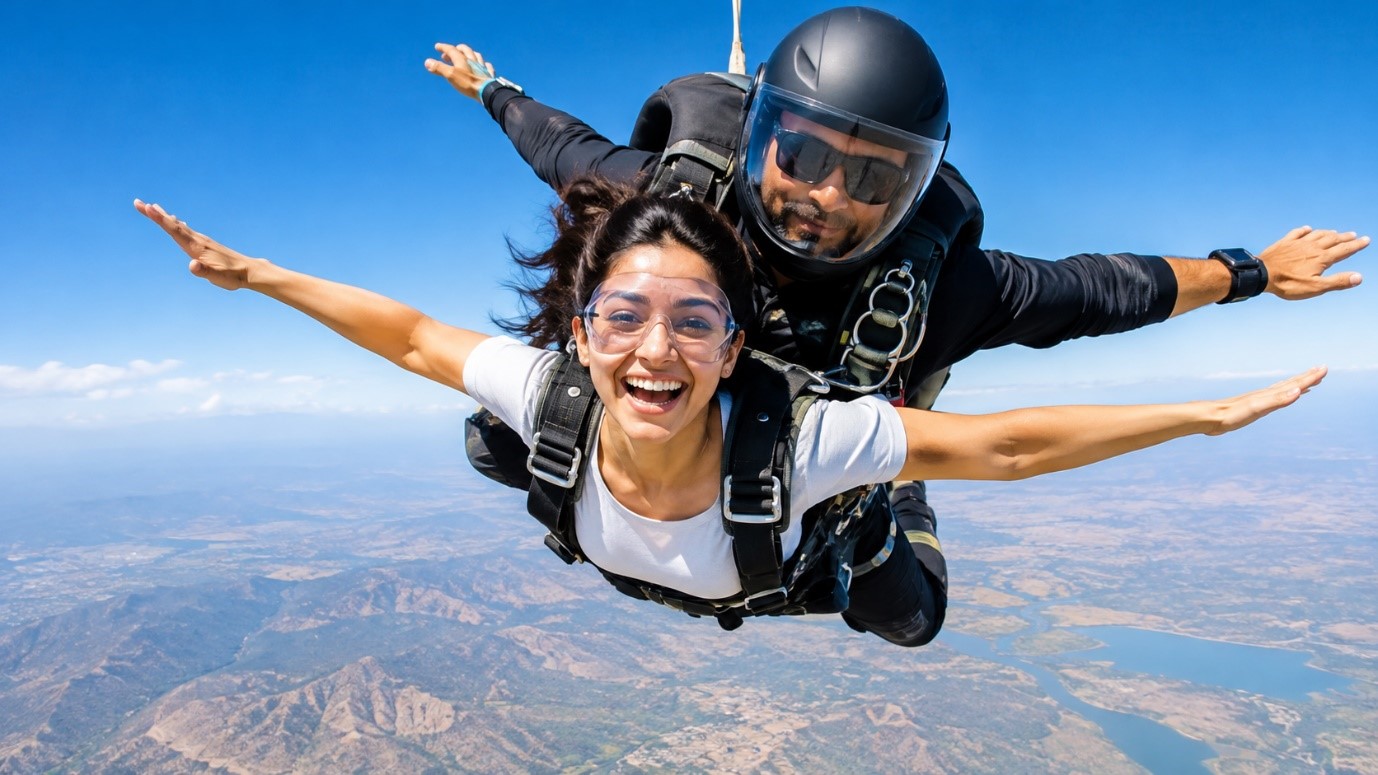
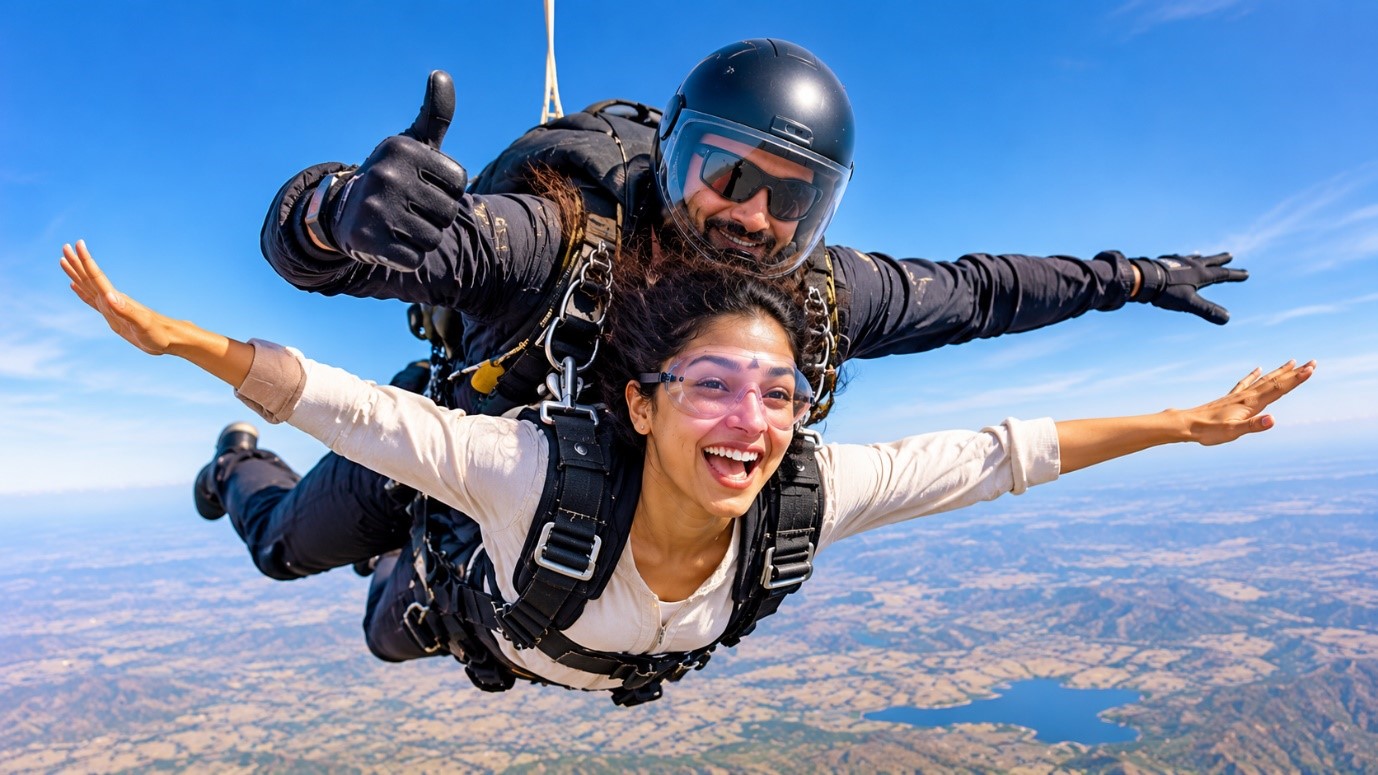
The pair leaves the aircraft and accelerates into freefall.
For approximately 30 seconds, the plane that carried them upward is no longer part of what they are thinking about.
But without it, none of those seconds would exist.
Aircraft Choice Is Part of Drop-Zone Infrastructure
People researching where to go skydiving in India should look at the complete operation.
Where is the drop zone?
What aircraft is being used?
What jump altitude is planned?
Who manages the operation?
How is the participant prepared?
What happens when weather changes?
What type of parachute and instructor system supports the tandem jump?
These questions reveal much more than a single package price.
Skydive India is operated by Macsen Aviation Pvt. Ltd. and conducts tandem operations from Manpur Airstrip near Abu Road.
The site also provides separate information about the drop zone, safety procedures and tandem experience, allowing potential jumpers to understand more of the operation before booking.
The Plane Is Part of the Memory
After landing, customers usually talk first about freefall.
That makes sense.
Nothing else on the day feels quite like it.
But when people watch their video later, many smaller memories return.
Walking toward the aircraft.
Hearing the engine.
Leaving the runway.
Watching the ground disappear below.
Sitting beside an instructor while the aircraft continues climbing.
Seeing the door open.
Moving into position.
And then leaving.
The aircraft is not simply the vehicle that transports you to the adventure.
It is the place where anticipation becomes reality.
If you are researching skydiving in India, learn about the operation behind the jump as carefully as you research the price.
Then, when you are ready to experience the GA8 Airvan from the inside and the Aravalli sky from the outside, explore Tandem Skydiving with Skydive India.