Skydiving in Dubai is one of the best-known international adventure experiences for Indian travellers. The Palm Jumeirah view, Dubai skyline and established commercial skydiving market have made the destination highly visible online. However, travellers who mainly want to experience a tandem skydive should compare the complete trip before deciding whether to travel internationally or book a jump in India.
The useful comparison is not about declaring one destination better. Dubai and India offer different settings, travel requirements and package structures. The right choice depends on whether Dubai itself is part of the holiday, how much time is available, the total travel budget and the type of view the jumper wants.
Skydiving in Dubai Is a Destination Experience
The official Skydive Dubai tandem page currently offers tandem experiences at the Palm Dropzone and Desert Campus. The Palm option is known for views of Palm Jumeirah and the Dubai skyline, while the desert option provides a different landscape. Current official package information shows prices from AED 2,199, with different media and location options. Prices can change, so travellers should always check the live booking page.
For someone already planning a Dubai holiday, adding a skydive can make practical sense. Flights, accommodation and local travel are already part of the trip. The activity becomes one part of a larger international itinerary rather than the only reason for travelling.
Skydiving in India Offers a Domestic Alternative
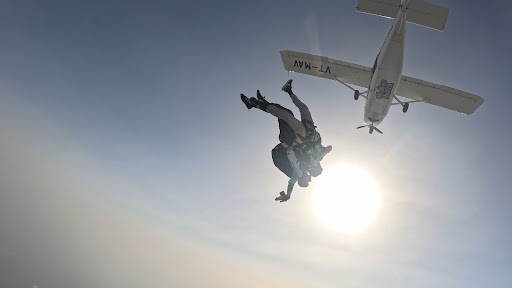
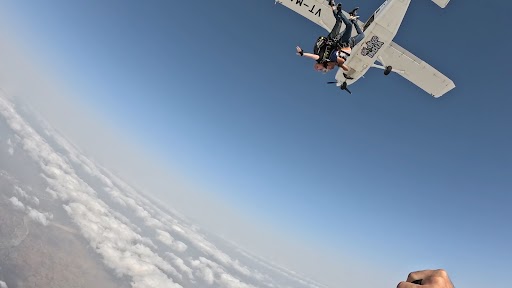
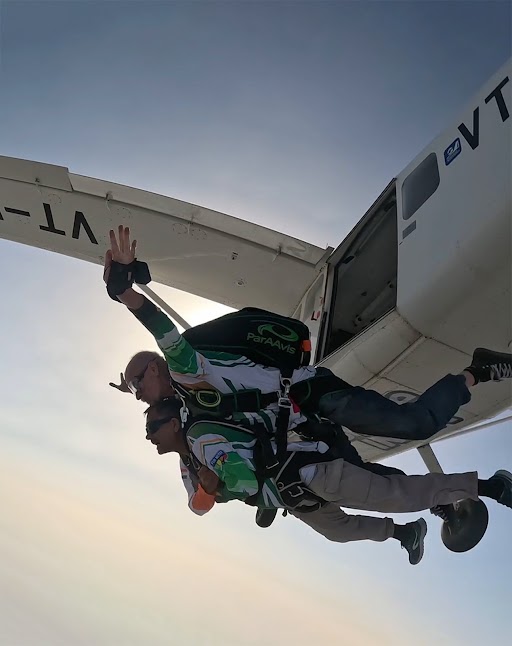
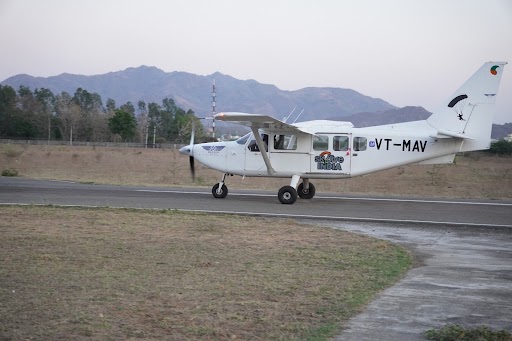
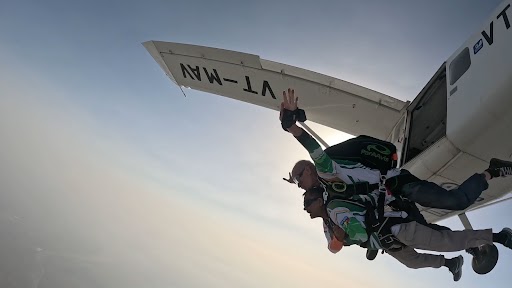
Travellers who mainly want the skydiving experience now have a domestic option as well. Skydive India operates tandem skydiving at Manpur Airstrip near Abu Road, Rajasthan. The current tandem skydiving package page lists jumps from around 10,000 feet with approximately 30 seconds of freefall.
The present India package information lists a handcam option at ₹29,999 plus GST and an outside-cameraman package at ₹39,999 plus GST. Both currently require ₹5,000 to book, with the balance payable on jump day. These figures are useful for comparison, but they should be rechecked before publishing or booking because package prices can change.
Compare the Complete Trip Cost, Not Only the Jump Price
This is the most important difference for an Indian traveller. Skydiving in Dubai may require international flights, hotel nights, local transport, food and other travel costs in addition to the activity price. If Dubai is already the holiday destination, these are normal holiday expenses. If the only reason for the trip is the skydive, they become part of the true cost of the experience.
A domestic jump can reduce some of those travel layers for people who are already in India. The Skydive India drop zone is near Abu Road and can be included in a Udaipur or Mount Abu trip. This can be particularly convenient for travellers from Rajasthan, Gujarat and nearby states.
Location and View Are Different
Dubai’s strongest visual advantage is its famous city and coastal landscape. The Palm Dropzone gives an aerial perspective over iconic man-made landmarks, while the Desert Campus offers a desert view. For many travellers, that specific Dubai scenery is a major reason to choose the destination.
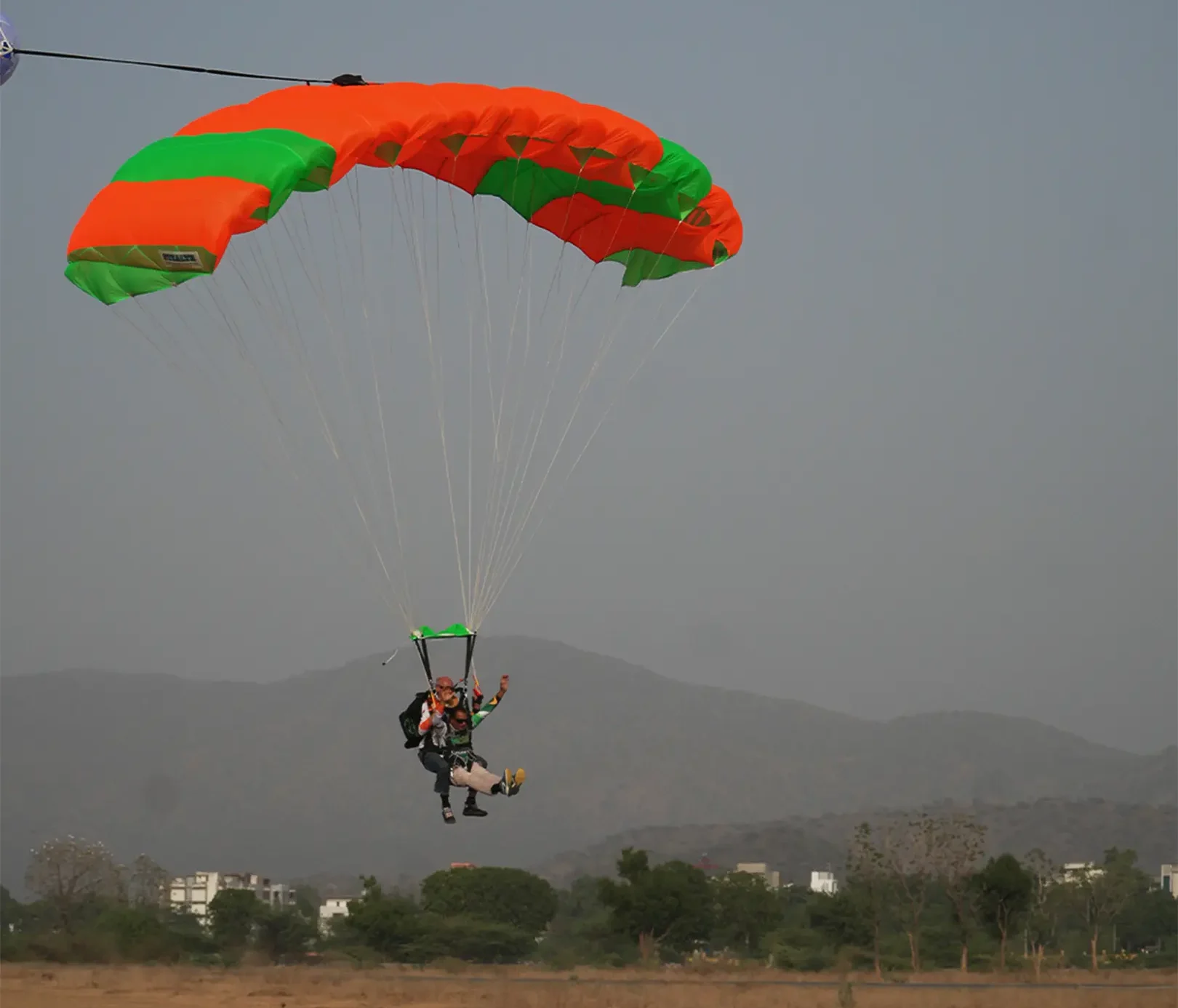
India offers a different setting. The Abu Road drop zone is surrounded by the Aravalli landscape, with open terrain and hill views. It does not try to copy the Dubai experience, and it should not be marketed that way. Travellers should decide whether they want an international city-view skydive or a domestic Rajasthan and Aravalli experience.
Jump Altitude and Freefall Time
The official Skydive Dubai booking information currently advertises tandem jumps from up to around 13,000 feet, depending on the package and operational conditions. Skydive India currently lists a 10,000-foot tandem jump with approximately 30 seconds of freefall. Altitude and freefall time are part of the experience, but they are not the only factors to compare.
The complete process also includes briefing, equipment, aircraft ride, instructor support, parachute flight, landing and media. First-time jumpers should understand the full experience rather than focusing only on the highest number in the package description.
Eligibility Rules Are Not the Same
Different operators use different age, weight, BMI and health criteria. Skydive Dubai currently publishes separate male and female weight and BMI limits on its tandem page. Skydive India currently states a maximum permitted weight of 113 kg, with additional charges in higher weight bands, and a minimum participant age of 12 with parental or guardian consent for minors.
These requirements should be checked before booking flights or hotels. A traveller should never assume that eligibility at one operator automatically means eligibility at another. Medical conditions, recent injuries and other restrictions may also require additional consideration.
Weather and Booking Flexibility Matter in Both Destinations
Skydiving is weather dependent everywhere. Skydive Dubai advises tourists to schedule the jump earlier in the holiday because weather may require rescheduling. Skydive India also states that unsuitable weather can lead to rescheduling. This is why a tandem jump should not be planned only a few hours before an international flight or fixed long-distance connection.
For Dubai, travellers should keep enough days in the trip to handle a possible weather change. For India, a Udaipur-Mount Abu itinerary can provide similar flexibility if the skydive is booked near the middle of the trip rather than at the end.
International Travel Adds Extra Planning
An international skydive also needs normal travel planning that is separate from the activity. Indian travellers should check passport validity, visa requirements, flight timings, local transport and hotel location before building the jump into the itinerary. These are not skydiving costs, but they affect the total time and budget required for the experience. If Dubai is already part of the holiday, this planning is normal. If the trip exists only for the jump, it becomes an important part of the comparison with India.
Media, Insurance and Booking Terms Also Need Comparison
Media is often an important part of a first skydive. Skydive Dubai sells different packages and add-ons for photos, standard video and social-media style edits, while Skydive India currently separates handcam and outside-cameraman packages. A traveller should compare the final media package rather than only the lowest advertised jump price.
Insurance and payment terms can also differ. Skydive Dubai’s official tandem information currently includes medical insurance in listed packages, while Skydive India advises participants to review their own insurance coverage because skydiving insurance is not currently provided by the operator. Booking and refund rules should therefore be read directly on the official sites before payment.
Which Option Makes More Sense for an Indian Traveller?
Choose Skydiving in Dubai when Dubai itself is part of the travel goal, the Palm or desert view matters to you, and an international holiday already fits the budget. Choose skydiving in India when the main goal is to experience tandem skydiving without building a complete international trip around it, or when Rajasthan and Gujarat are easier to reach.
Before deciding, compare the current official prices, media inclusions, travel time, eligibility and cancellation or rescheduling rules. If India is the preferred option, check the How to Reach Skydive India guide and the latest tandem package details. If Dubai is the preferred option, use the official Skydive Dubai booking page rather than third-party price lists. A clear comparison helps travellers choose based on the experience they actually want, not only on which destination is more famous online.